
You’re Gen Z if you were born between 1997 and 2012, a Millennial if you arrived between 1981 and 1996, and part of the emerging Gen Alpha if you’re younger than 2013. These labels do more than mark birth years—they reveal how your generation uniquely experiences and responds to the climate crisis.
Understanding your generational identity unlocks powerful insights into how you can drive environmental change. Gen Z grew up with climate anxiety as a constant backdrop, making you naturally solutions-oriented and skeptical of greenwashing. Millennials witnessed the shift from climate denial to acceptance, positioning you as bridge-builders between older skeptics and younger activists. Gen Alpha is being raised in a world where sustainability isn’t optional—it’s embedded in education and daily life from day one.
These distinctions matter because effective environmental action requires meeting people where they are. When I started organizing community clean-ups five years ago, I learned that my Gen Z peers responded to Instagram stories and direct action, while older Millennials preferred Facebook events and structured volunteer programs. Neither approach was better—they were simply different languages for the same urgent message.
Your generation’s relationship with technology, social media, and global connectivity shapes how you’ll tackle environmental challenges. Gen Z’s ability to mobilize millions through TikTok campaigns demonstrates unprecedented power to shift public opinion rapidly. Millennials’ decade-plus professional experience positions them to influence corporate sustainability policies from within. Gen Alpha’s climate-first education will produce tomorrow’s green innovators.
Recognizing these patterns helps you leverage your generational strengths while collaborating across age groups. The climate crisis doesn’t care about birth years, but understanding generational perspectives transforms how effectively we unite to solve it.
Decoding the Generational Labels: Who’s Who

Millennials: The Original Digital Natives
If you born between 1981 and 1996, you’re part of the generation that witnessed the internet’s explosive growth firsthand. Millennials came of age during pivotal environmental wake-up calls: the Kyoto Protocol debates, Al Gore’s “An Inconvenient Truth,” and the rise of hybrid vehicles. I remember my college roommate organizing our first campus recycling program in 2004, armed with nothing but a borrowed pickup truck and stubborn optimism.
Today, Millennials occupy a unique position in the environmental movement. We’re now parents, entrepreneurs, policymakers, and educators translating our digital fluency into climate action. We pioneered online activism, proving that hashtags could spark real-world change. Our generation normalized sustainable choices like reusable water bottles and meatless Mondays, creating market demand that forced corporations to respond.
While we’ve made progress, our challenge is channeling youthful idealism into sustained, practical solutions. The climate crisis won’t wait for perfect conditions, but our generation’s persistence and adaptability position us to bridge traditional activism with innovative approaches, mentoring Gen Z while learning from their urgency.
Gen Z: The Climate Crisis Generation
Generation Z, born from 1997 to 2012, came of age watching climate disasters unfold in real-time on their smartphones. They’re the generation that learned about rising sea levels alongside algebra, scrolled through wildfire footage during lunch breaks, and had their school days interrupted by climate strikes. Unlike previous generations who gradually awakened to environmental threats, Gen Z never had the luxury of ignorance.
This constant awareness comes with a cost. Studies show Gen Z experiences a higher rate of climate anxiety than any generation before them. But rather than succumbing to despair, they’ve channeled that fear into fierce activism. Think Greta Thunberg sparking global school strikes, or the millions of young people demanding corporate accountability through social media campaigns.
What sets Gen Z apart is their refusal to wait for permission to create change. They’re launching zero-waste businesses from dorm rooms, organizing community cleanups through Instagram stories, and holding brands accountable with the click of a button. They understand that individual actions matter, but they’re equally focused on systemic solutions, pushing for policy changes that previous generations only whispered about.
Gen Alpha: Growing Up Green
Meet Gen Alpha, the youngest generation born from 2013 onwards, and they’re already rewriting the environmental playbook. These kids are learning about climate change alongside their ABCs, turning recycling into second nature before they can even tie their shoes.
What makes Gen Alpha truly remarkable is their context: they’ve never known a world without climate conversations. While older generations had to unlearn wasteful habits, these young people are growing up with sustainability as their default setting. I’ve watched my neighbor’s seven-year-old correct adults about proper composting techniques with the confidence of a seasoned environmentalist.
Their schools integrate environmental science into every subject, from math problems calculating carbon footprints to art projects using recycled materials. They’re digital natives who use technology not just for entertainment, but to track endangered species and participate in virtual beach cleanups.
This generation gives me genuine hope. They’re inheriting enormous challenges, yes, but they’re also equipped with environmental literacy from day one. As they grow into tomorrow’s leaders, activists, and innovators, their childhood foundation in green thinking could become our planet’s greatest asset.
Why These Labels Actually Matter for Environmental Action
Last summer, I watched three generations tackle the same beach cleanup in completely different ways. My grandmother’s group worked methodically, section by section, their decades of organizational experience evident. The Gen X coordinators focused on logistics and measurable impact. Meanwhile, my Gen Z friends immediately started filming before-and-after shots, turned it into an Instagram story challenge, and by afternoon had mobilized fifty more volunteers through TikTok. None of these approaches was better than the others, but together, they created something powerful.
This is exactly why understanding generational labels matters for environmental action. When we recognize how different generations communicate, learn, and engage, we can build movements that actually work instead of talking past each other.
Think about it: if you’re creating a climate education program for Gen Z, leading with peer-to-peer video content and interactive challenges will resonate far more than lengthy reports. But those same reports might be exactly what policymakers from older generations need to make funding decisions. We need both.
I’ve seen this play out in community gardens, zero-waste initiatives, and renewable energy campaigns. When organizers understand that Millennials often value collaborative decision-making while Gen Alpha responds to gamification, they design programs that engage everyone. When environmental educators recognize that Gen Z processes information through visual storytelling rather than linear presentations, they adapt their teaching methods accordingly.
This isn’t about stereotyping or creating divisions. It’s about meeting people where they are. The climate crisis demands all hands on deck, and that means communicating effectively across generational lines. When a Boomer with decades of activism experience teams up with a Gen Z digital native, they can reach audiences neither could access alone.
Understanding these labels helps us build bridges instead of barriers. It transforms environmental action from scattered individual efforts into coordinated, multi-generational movements that leverage everyone’s strengths. That beach cleanup taught me that our differences aren’t obstacles; they’re our greatest strategic advantage.
How Each Generation Learns About Environmental Issues Differently
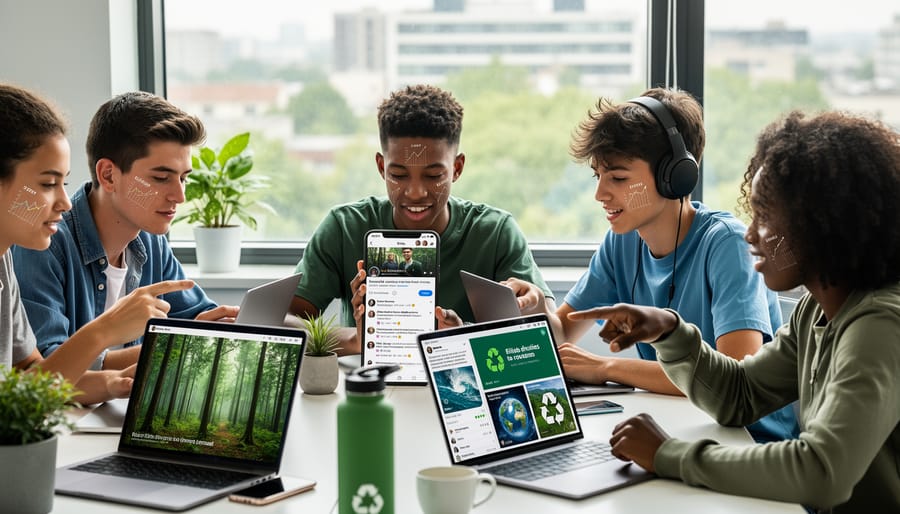
Traditional vs. Digital Learning Approaches
I remember sitting through PowerPoint presentations about recycling in my high school auditorium, watching grainy documentaries about deforestation while taking notes for the inevitable quiz. That was environmental education for older Millennials: structured, curriculum-based, and largely confined to science classrooms. We learned about climate change through textbooks and occasional field trips, absorbing information in linear, controlled environments.
Gen Z’s experience couldn’t be more different. Today’s younger generation encounters environmental content while scrolling through their morning feed. A 60-second TikTok explaining ocean acidification reaches millions more people than any classroom lecture ever could. Instagram infographics break down carbon footprints into digestible visuals. YouTube creators transform complex ecological concepts into compelling narratives that feel less like homework and more like entertainment.
The most effective environmental education methods now look like this:
- Millennials: Structured classroom lessons, educational field trips, and documentary screenings
- Gen Z: Bite-sized social media content, interactive apps, influencer partnerships, and peer-to-peer sharing
What makes Gen Z’s approach powerful isn’t just the platform shift, it’s the immediacy and authenticity. They’re witnessing climate impacts in real-time through live streams and user-generated content. When a creator shares their zero-waste journey or documents coral bleaching firsthand, it creates emotional connections that traditional methods sometimes missed. This isn’t about one approach being superior. Rather, understanding these different learning styles helps us bridge generational gaps and create environmental movements that speak everyone’s language, combining Millennial institutional knowledge with Gen Z’s digital fluency to amplify our collective impact.
Peer Influence and Social Movements
Gen Z and Gen Alpha aren’t just participating in environmental movements—they’re fundamentally reshaping how activism happens. When Greta Thunberg started her solitary school strike in 2018, she sparked a global phenomenon that perfectly captured this generation’s approach: direct, uncompromising, and digitally amplified. Within months, millions of young people joined Fridays for Future strikes, coordinating through Instagram stories and TikTok videos rather than traditional organizing structures.
What makes this different? Younger generations blur the lines between online and offline action seamlessly. A teenager might share climate science on their feed in the morning, attend a beach cleanup in the afternoon, and join a virtual town hall that evening—all feeling equally valid as activism. They’ve created thriving communities in unexpected spaces: Reddit threads dissecting corporate greenwashing, Discord servers coordinating local action, and YouTube channels making renewable energy relatable.
I’ve watched friends transform their entire social circles through simple, consistent environmental advocacy online. One shared her zero-waste journey authentically, mistakes included, and inspired twelve others to start composting. This peer-to-peer influence, multiplied across millions of connected young people, creates momentum that traditional campaigns struggle to match. The power lies not in perfection, but in collective, visible commitment.
The Power of Personal Connection
When my neighbor Sarah started talking about the refill station opening downtown instead of abstract carbon footprints, something clicked. Suddenly, environmental action wasn’t about polar bears thousands of miles away—it was about the plastic bottles piling up in our own recycling bins. This shift toward personal connection works across every generation because it transforms global problems into neighborhood solutions.
I’ve seen this power firsthand at community gardens where Gen X parents work alongside Gen Z students, united by the simple goal of growing food locally. A college student in Portland told me how her grandmother became her biggest sustainability ally after they calculated together how much money rain barrels could save on water bills. The conversation started with practical savings, not planetary crisis, and that made all the difference.
The most effective environmental stories share common threads: they’re specific, they’re local, and they offer tangible next steps. When a Millennial entrepreneur in my city launched a tool library to reduce consumption, families from every generation showed up because borrowing made immediate sense. These relatable entry points remind us that meaningful change often begins in our own backyards, literally and figuratively.
Bridging the Generational Gap for Collective Impact
Here’s the thing about generational labels: they’re most powerful when they help us understand each other, not when they divide us. I learned this firsthand when my Gen X neighbor taught me how to repair electronics instead of replacing them, while I helped her set up a community composting Instagram account. That exchange captured something essential: every generation brings unique strengths to the environmental table.
Baby Boomers often have decades of environmental advocacy experience and remember when rivers literally caught fire, giving them perspective on how far we’ve come. Gen X pioneered recycling programs and sustainable business practices. Millennials mastered digital organizing and made sustainability culturally cool. Gen Z brings fierce urgency and social media savvy. Gen Alpha, though still young, is growing up with climate literacy baked into their education.
The magic happens when we combine these strengths instead of letting stereotypes keep us apart. Here’s how to create meaningful intergenerational environmental collaborations:
- Start with shared values, not differences. Host a casual gathering where people of all ages discuss what aspects of the environment matter most to them personally. You’ll discover common ground quickly.
- Match complementary skills deliberately. Pair someone experienced in local policy with someone skilled in digital campaigns. Combine hands-on expertise with technological innovation.
- Create learning exchanges, not lectures. Set up monthly skill-swaps where older generations teach traditional sustainability practices like preserving food or mending clothes, while younger participants share digital tools for tracking carbon footprints or organizing virtual events.
- Design projects with diverse entry points. Whether someone prefers face-to-face community meetings or coordinating via group chats, make sure your initiative accommodates different communication styles.
- Celebrate incremental progress together. Document your collective wins, from preventing a local development project to hitting community solar panel goals.
Remember, the climate crisis doesn’t care about birth years. When a 65-year-old environmental lawyer collaborates with a 22-year-old TikTok creator to stop a pipeline, that’s exponential impact. When grandparents join youth climate strikes, it signals something powerful: we’re all in this together.
The most successful environmental movements have always been multigenerational. By intentionally bridging these gaps now, we’re not just being nice or inclusive, we’re being strategic. We’re building the resilient, diverse coalitions our planet desperately needs.
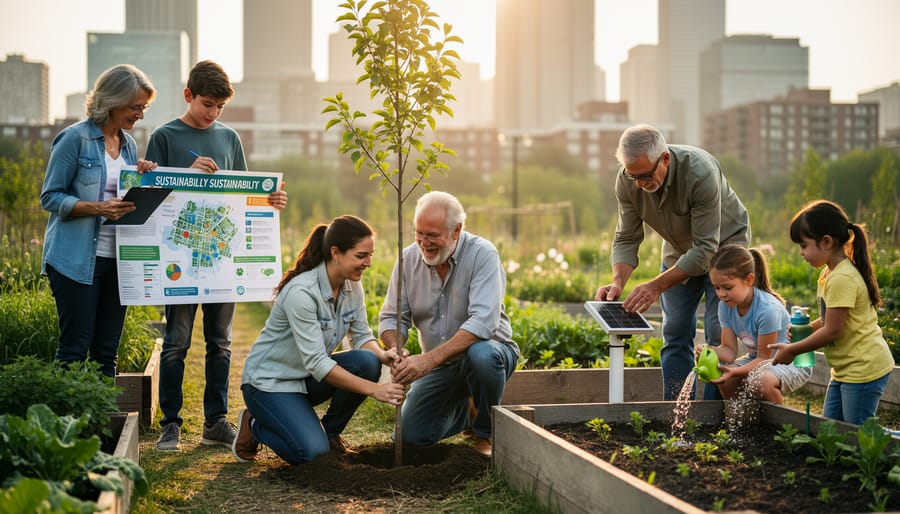
What Your Generation Brings to the Environmental Movement
Here’s the truth that should fill you with hope: each generation brings something irreplaceable to the fight for our planet. Understanding what you uniquely offer isn’t about competition—it’s about recognizing where your power lies.
If you’re a Millennial, you’ve witnessed the shift from climate doubt to climate crisis in real time. That experience has shaped you into strategic organizers with serious economic influence. You’re entering your peak earning years, which means your purchasing decisions reshape entire industries. I’ve watched Millennial friends transform their workplaces by demanding sustainable practices, launch zero-waste businesses from kitchen tables, and leverage social networks built over decades to mobilize thousands. Your superpower? You understand both the old systems and the new possibilities, making you perfect translators and bridge-builders.
Gen Z, you’ve grown up with the climate emergency as background noise to your entire lives, and that’s given you something previous generations lack: an unshakeable sense of urgency paired with digital native fluency. You don’t just use technology—you wield it as an extension of yourselves. When a single TikTok video about fast fashion’s impact reaches millions overnight, that’s your generational strength in action. You’re unafraid to call out greenwashing, demand transparency, and reject the “that’s just how things are done” mentality that’s held progress hostage.
Gen Alpha, though still young, you’re arriving with sustainability as your default setting. You’re asking “why isn’t this compostable?” before you can tie your shoes. Growing up in a world where climate solutions are normalized rather than fringe gives you a head start no previous generation has enjoyed. Your fresh perspective will challenge assumptions we don’t even know we’re making.
Together, we’re unstoppable.
Here’s the truth: whether you call yourself Gen Z, a Millennial, or part of Gen Alpha matters far less than what you actually do with the unique perspective your generation brings to the table. I’ve watched my Gen Z friends organize climate strikes through Instagram stories while my Millennial colleagues revolutionize corporate sustainability practices from within, and honestly? That combination is exactly what our planet needs right now.
Understanding generational strengths isn’t about boxing ourselves in or creating division. It’s about recognizing that your digital fluency, your skepticism of greenwashing, your demand for authenticity—these aren’t just personality traits. They’re powerful tools for environmental change. When you collaborate with older generations who bring institutional knowledge and resources, and younger ones who bring fresh urgency and innovation, that’s when real transformation happens.
So here’s my challenge to you: take what makes your generation uniquely equipped for this moment—whether it’s your social media savvy, your systems-thinking approach, or your refusal to accept business as usual—and use it. But don’t stop there. Seek out the wisdom from generations before you and mentor those coming up behind you. Share what you’re learning. Start conversations across age divides.
The environmental movement needs every generation showing up with their full selves. Your perspective isn’t just valid; it’s essential. The hope lies not in any single generation saving the planet alone, but in all of us working together, each bringing our irreplaceable piece to the puzzle. What will yours be?