
An inspiring environment isn’t something you stumble upon by chance. It’s a space you deliberately create, whether physical or cultural, that motivates people to take meaningful environmental action and sustains their commitment over time. This matters because burnout and eco-anxiety are real barriers keeping passionate people from making the difference they want to make in 2026.
I learned this the hard way three years ago when I tried organizing a campus sustainability group. We had enthusiasm, we had ideas, but we met in a fluorescent-lit basement that felt more like detention than a movement. Within two months, half our members stopped showing up. The environment we created didn’t reflect the change we wanted to see.
The good news? Creating truly inspiring environmental spaces follows clear patterns. Community gardens that become neighborhood hubs. Workplaces where sustainability feels exciting rather than preachy. Schools where students actually want to participate in green initiatives. These success stories share common elements: they make environmental action visible, celebrate small wins consistently, and give people autonomy to contribute in ways that match their strengths.
This article breaks down both sides of what makes environments inspiring. First, we’ll explore real stories of spaces and communities that have sparked lasting environmental change, from corporate offices to grassroots movements. Then, you’ll get a practical framework for building that kind of energy in your own sphere, whether you’re trying to energize your workplace, organize your neighborhood, or simply create a home that reinforces your values instead of working against them. You don’t need a big budget or formal authority. You need intention and the right approach.
What Makes an Environment Truly Inspiring
An inspiring environment doesn’t announce itself with finger-wagging reminders about melting glaciers. Instead, it makes sustainable living feel natural, visible, and contagious. Think of it as the difference between a gym covered in motivational posters versus one where you actually see people enjoying their workouts, the latter creates an environment where fitness becomes appealing rather than obligatory.
The most powerful characteristic of these spaces is that they remove friction from sustainable choices. When composting bins are positioned more conveniently than trash cans, when bike storage is easier to access than parking spots, when reusable containers are the default rather than single-use options, people shift their behavior without needing constant willpower. You’re not fighting against the environment; you’re flowing with it.
Visibility plays an equally crucial role. Solar panels on a rooftop, composting systems with clear glass panels, real-time energy dashboards in common areas, these features transform invisible environmental impacts into tangible, observable processes. When you can see your neighbor’s garden thriving on rainwater collection or watch your building’s energy consumption drop on a shared monitor, sustainability becomes concrete rather than abstract.
Social proof amplifies this effect dramatically. Humans are deeply influenced by what they perceive as normal behavior within their immediate environment. When a space communicates that most people here choose sustainable options, through visible participation, casual conversations, or simple design cues, newcomers naturally adopt those behaviors. The environment itself becomes a teacher, showing rather than telling.
What ties these elements together is a sense of possibility rather than sacrifice. Inspiring environments celebrate what you gain, healthier air, stronger communities, lower costs, creative solutions, rather than emphasizing what you give up. They showcase innovation and progress, making environmental action feel forward-looking and empowering instead of regressive and limiting.
Communities That Transformed Their Spaces and Mindsets
The Neighborhood That Turned Waste Into Art
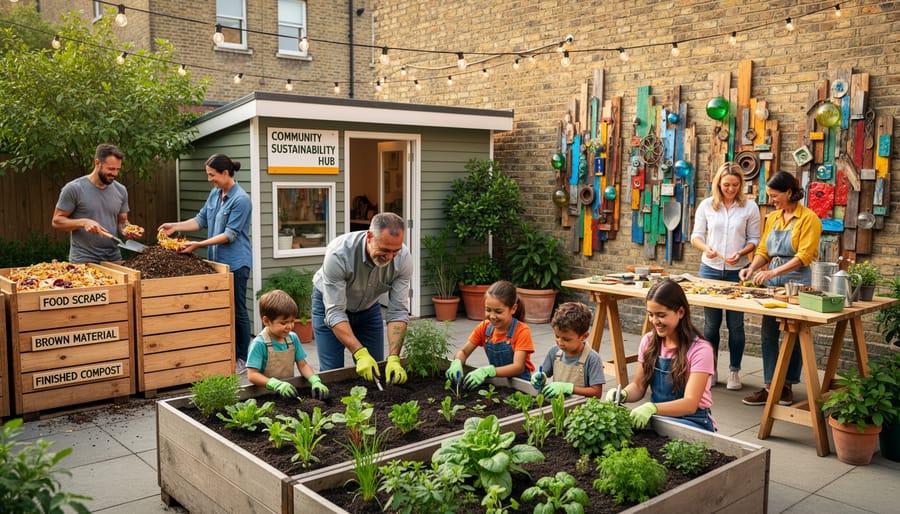
In Brooklyn’s Sunset Park neighborhood, residents were tired of seeing overflowing bins and littered streets. Instead of complaining or moving away, a group of local artists partnered with environmental advocates to create something remarkable: a series of vibrant murals and sculptures made entirely from materials pulled from the waste stream.
They started with a 20-foot installation called “The Phoenix”, a massive bird constructed from discarded plastic bottles, aluminum cans, and glass containers that residents had separated for recycling. Positioned at the neighborhood’s main intersection, it became impossible to ignore. Within weeks, contamination rates in recycling bins dropped by 40% as neighbors began paying attention to what they threw away.
The project expanded to include composting sculptures in community gardens, where food scraps visibly transformed into rich soil that grew vegetables for local families. Children who once walked past trash without a second thought now led their parents to the installations, explaining which materials belonged where. Similar to how environmental regulations like Clean Water Act settlements force accountability through visibility, these art pieces made waste management tangible and compelling.
What made this environment truly inspiring wasn’t just the art itself, but how it reframed waste from a shameful problem into a creative challenge. Neighbors started competing to contribute interesting materials, sharing photos of the installations on social media, and volunteering for monthly “waste transformation” workshops. The physical environment had shifted, and with it, the community’s entire relationship to their ecological footprint.
The Office Building That Made Sustainability Contagious
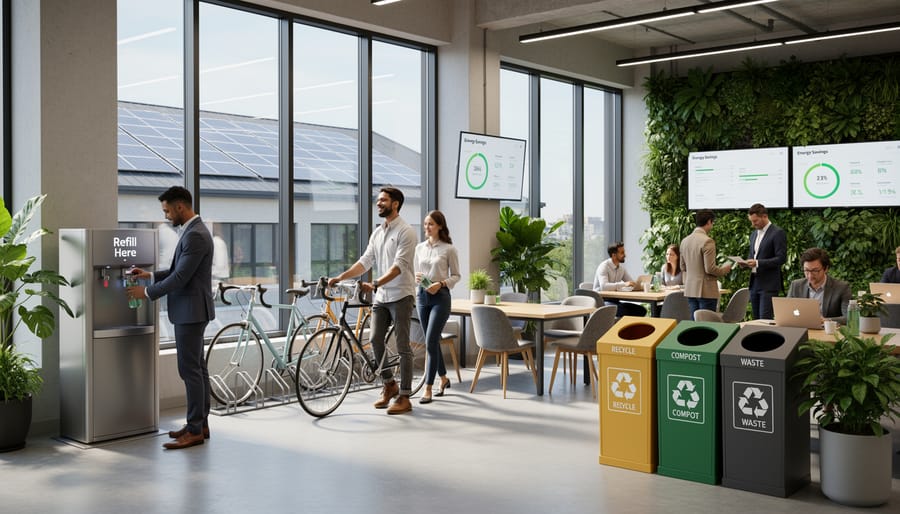
At a mid-sized tech company in Portland, the facilities team tried something radical in 2023: they made the building itself tell the story of sustainability. Instead of sending yet another email about recycling, they installed transparent waste sorting stations in high-traffic areas where everyone could see exactly what happened to their lunch containers and coffee cups. Within three months, contamination rates dropped by 67%.
The real transformation came when they redesigned the break rooms. Reusable dishware became the only option within arm’s reach, disposables were hidden in a back cabinet with a handwritten note showing the environmental cost of each item. The water stations featured live counters displaying plastic bottles saved. Bike parking moved from the basement to the main entrance, complete with repair stations and shower facilities, while the furthest parking spots were reserved for single-occupancy vehicles.
What made this environment truly inspiring wasn’t the infrastructure alone, it was how it shifted conversations. Employees started sharing which reusable containers worked best. The bike commuters formed an informal network. Sustainability became visible, social, and normal rather than a sacrifice. Within a year, the company measured a 40% reduction in single-use plastics and 23% increase in bike commuting. Other departments began requesting similar redesigns, proving that when your environment makes sustainable choices feel effortless and communal, behavior change spreads organically.
The Campus Where Students Led the Energy Revolution
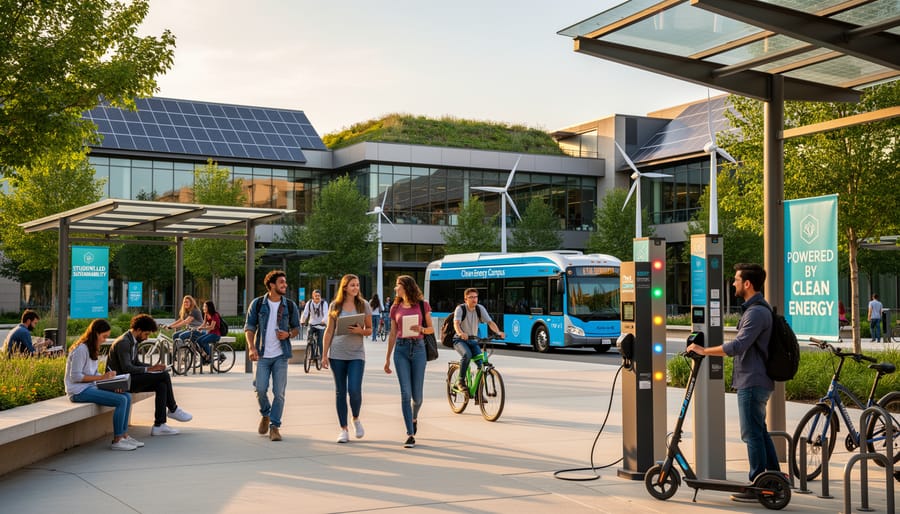
At a mid-sized university in Oregon, the turning point wasn’t a top-down sustainability mandate, it was a single dorm lounge where students installed a real-time energy monitor they’d built themselves. The screen showed exactly how much power the building used each hour, and within weeks, residents had turned it into a friendly competition. They unplugged phantom drains, switched off unnecessary lights, and started calling out wasteful habits, not with judgment, but with the kind of teasing that only works among peers.
What made this environment truly inspiring was how visible the impact became. Students could see their collective choices mattering in real numbers, dropping kilowatt-hours week after week. The energy monitor wasn’t hidden in a facilities office; it glowed in the social heart of the building where people gathered. Other dorms noticed, got jealous, and demanded their own monitors. Within two years, the peer-driven culture had spread across campus, cutting energy use by 23% without a single lecture from administration.
The students didn’t stop at monitoring. They hosted “energy down” parties where buildings competed to reach the lowest usage, created Instagram accounts celebrating the week’s conservation wins, and turned what could have been a tedious obligation into something genuinely social and fun. The institution eventually followed their lead, investing in broader infrastructure improvements, but only after students proved the concept worked and built the cultural momentum that made change inevitable.
The Science Behind Inspiration and Environmental Action
There’s a fascinating paradox at the heart of environmental behavior: we often know what we should do, yet we don’t do it. Research reveals that knowledge alone rarely drives action. What does? The environment around us.
A 2024 study from Stanford’s Environmental Psychology Lab found that physical visibility of sustainable infrastructure increased participation rates by 340% compared to hidden systems. When composting bins were moved from basement storage to attractive stations near building entrances, usage jumped dramatically, not because people suddenly cared more, but because the visible design signaled that “this is what we do here.” The environment whispered norms without a single lecture.
This connects to what behavioral scientists call “choice architecture.” When recycling stations are easier to use than trash bins, when bike racks are closer to entrances than parking spots, when water refill stations are more accessible than vending machines, people follow the path of least resistance toward sustainability. MIT researchers documented this in their 2025 campus redesign study: simply repositioning sustainable options reduced single-use plastics by 62% within three months.
Social proof amplifies these effects exponentially. We’re hardwired to look to others for behavioral cues, especially in ambiguous situations. When we see neighbors tending community gardens, colleagues using reusable containers, or public art celebrating local efforts to clean up our water sources, we unconsciously adopt those behaviors as normal and desirable. A University of Michigan study tracked this “inspiration cascade” through apartment buildings, finding that visible sustainable actions by just 15% of residents shifted building-wide behavior within six months.
The most powerful environments combine all three elements: they make sustainable actions visible, accessible, and socially celebrated. This trinity transforms abstract environmental concern into concrete daily habits without anyone feeling lectured or guilted into compliance.
Creating Your Own Inspiring Environment
Start Small: Your Personal Space
Your bedroom, kitchen, or desk can become a quiet catalyst for change with just a few strategic tweaks. The trick is making sustainable choices visible and convenient rather than hidden away as an afterthought.
Start by positioning your reusable water bottle, coffee mug, and shopping bags where you’ll literally stumble over them, by your keys, in your bag, on your bedside table. When the sustainable option is the easiest grab, you’ll choose it without thinking. I moved my reusable containers to the front of my cabinet and buried the plastic wrap in the back. Within weeks, I’d stopped buying single-use items simply because reaching for them required effort.
Create visual reminders that inspire rather than scold. Instead of guilt-inducing notes, try a small plant on your desk or a photo of a place you love in nature positioned where you make daily decisions. These gentle cues reconnect you to why you care without the hectoring tone that breeds resentment.
Designate a “sustainability station”, a specific drawer, shelf, or corner where you keep your eco-friendly tools together. When everything has a home and that home is attractive and accessible, you’ll actually use what you’ve invested in. Mine holds repair supplies, reusable produce bags, and a collection of glass jars that somehow make bulk shopping feel less like a chore and more like a small rebellion against waste.
Build Momentum: Expanding to Shared Spaces
Once you’ve created momentum in your personal space, shared environments become your next frontier. The key insight: you don’t need permission to start making sustainable choices more visible and accessible to others.
Begin by being conspicuously sustainable. When I brought reusable containers to my office kitchen, I wasn’t trying to make a statement, I just started using them. Within weeks, three colleagues asked where I got mine. Visibility creates curiosity, which creates conversation, which creates change. Place a small plant on a shared desk, use the stairs instead of the elevator, or pack waste-free lunches. Let your actions be the invitation.
Next, identify the lowest-friction improvements. In apartment buildings, this might mean organizing a single clothing swap or starting a simple tool library in the lobby. At work, suggest replacing disposable cups near the coffee station with mugs, frame it as cost savings, not environmental preaching. These small shifts make the sustainable choice the easy choice for everyone.
Find your allies through gentle offers rather than demands. “I’m starting a carpool, anyone interested?” beats “We should all drive less.” Co-creation builds ownership. When people contribute ideas, they become invested in the outcome.
Finally, celebrate every small win publicly. A simple “Thanks for using the compost bin!” note creates positive reinforcement that spreads faster than any policy memo.
Go Big: Community-Wide Transformation
Community-wide transformation requires building coalitions before launching visible projects. Start by identifying natural allies, teachers, business owners, faith leaders, who already care about environmental issues but may lack a framework for action. Schedule informal conversations to understand their concerns and constraints rather than pitching your vision immediately.
Successful large-scale projects demonstrate quick wins before asking for major commitments. A neighborhood composting hub or solar co-op pilot proves the concept works locally. Document everything with photos, participation numbers, and measurable outcomes like pounds of waste diverted or kilowatt-hours generated.
Secure resources through layered funding. Apply for municipal sustainability grants while launching crowdfunding that gives residents ownership. Partner with local businesses for in-kind donations, a hardware store providing materials, a café hosting planning meetings. This diversified approach prevents dependence on a single funding source.
Maintain momentum by celebrating milestones publicly and rotating leadership responsibilities. Monthly community gatherings showcase progress while preventing burnout among core organizers. Connect your local work to broader movements, whether renewable energy transitions or understanding what it means for water quality improvements, so participants see themselves contributing to systemic change rather than isolated projects.
We’ve talked about inspiring environments as if they’re add-ons, nice-to-haves that make sustainability more pleasant. They’re not. They’re the difference between a movement that sputters and one that spreads. Every space where someone feels energized rather than exhausted by environmental action becomes a ripple that reaches far beyond its walls.
You don’t need permission or a budget to start. The inspiring environment you create in your apartment, your office corner, or your street can shift how dozens of people around you relate to the planet. I’ve watched it happen: one person makes composting visible and suddenly five neighbors want in. Someone starts a carpool board and the parking lot empties out. These aren’t coincidences. They’re proof that environments shape us, and we shape environments.
The most powerful environmental stories of our time didn’t begin with perfect conditions. They began with people who refused to wait for someone else to create the inspiration they needed. They built it themselves, one visible choice at a time. They made sustainable action contagious by making it seen, celebrated, and easy.
Your move now is simple: pick one space you occupy and make it better. Make sustainable choices visible. Make them social. Make them the path of least resistance. Then watch what happens. The same energy that helps communities hold polluters accountable starts with ordinary people transforming ordinary spaces. That includes you, right where you are.