
The Climate Clock is a massive digital countdown showing how much time humanity has left to take decisive action before climate change becomes irreversible, and right now, that deadline sits at fewer than six years away. Created by artists and activists Andrew Boyd and Gan Golan, this striking art installation translates complex climate science into something visceral and impossible to ignore: a ticking timer displayed in bold red digits that counts down to the moment we exhaust our carbon budget for limiting global warming to 1.5°C.
I first encountered the concept while scrolling through social media late one night, and I’ll admit it hit differently than the usual climate headlines. There’s something about watching actual seconds tick away that transforms abstract scientific warnings into gut-level urgency. The installation has appeared in locations from New York’s Union Square to Melbourne’s Edinburgh Gardens, turning public spaces into confrontation zones where passersby can’t look away from our collective deadline.
But here’s what makes the Climate Clock more than just a doomsday device: it doesn’t just count down. The display also features a “lifeline” counter showing the percentage of global energy currently supplied by renewables, a number that climbs steadily upward. This dual message captures the reality we’re living: yes, time is running out, but solutions are scaling faster than ever before.
Understanding what the Climate Clock represents matters because it reframes how we think about climate action. Instead of viewing environmental responsibility as some distant, abstract concept, the clock makes it personal and immediate. Every second that passes is a second we could spend making different choices, pushing for policy changes, or supporting renewable energy. The question isn’t whether we have time. It’s what we’ll do with the time we have left.
What Is the Climate Change Clock?
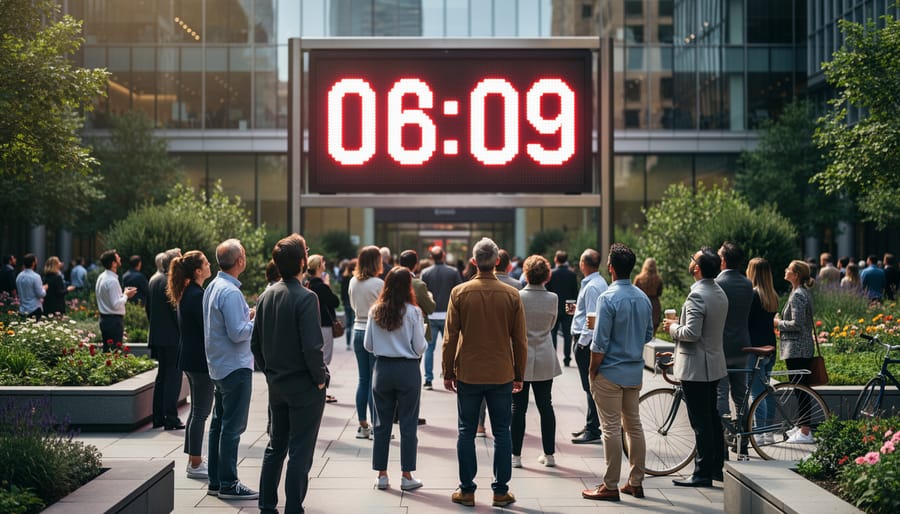
Picture this: a massive digital display, its glowing numbers ticking steadily downward in the middle of a city park or on the side of a skyscraper. It’s not counting down to New Year’s Eve or a product launch. It’s measuring something far more consequential, the time we have left to prevent catastrophic climate change.
The Climate Clock is an art installation conceived by artists and activists Andrew Boyd and Gan Golan. First appearing in late 2020, it represents a bold attempt to make the abstract crisis of climate change impossibly concrete. Rather than drowning us in parts-per-million statistics or talking about warming in distant decades, the clock presents a stark visual: years, days, hours, minutes, and seconds counting down to a critical threshold.
The design is deceptively simple. This large digital countdown tracks how much time remains for humanity to reduce emissions enough to avoid the worst effects of climate change. It’s calibrated to our remaining carbon budget, the amount of greenhouse gases we can still emit while staying within relatively safe temperature limits. Every second that passes without meaningful action shrinks that budget further.
The clock isn’t confined to one location. Since its debut, installations have appeared in multiple cities worldwide, transforming the climate countdown into a global movement. In Melbourne, Australia, residents encounter it at Edinburgh Gardens, where the relentless digital descent serves as both artwork and alarm. Each installation carries the same urgent message: time isn’t just passing, it’s running out.
What makes the Climate Clock particularly powerful is its refusal to let us look away. We can ignore scientific papers and tune out news reports, but a giant countdown in a public space, one that shrinks every single second, demands attention. It forces a question we’d rather avoid: what happens when it reaches zero?
How the Countdown Actually Works
You’ve probably seen headlines talking about “only X years left to act on climate” and wondered how anyone comes up with that number. The Climate Clock translates the most critical metric in climate science, our remaining carbon budget, into something you can watch tick away in real time. Here’s what’s actually happening behind that countdown.
At its core, the clock calculates how much time we have before the world exhausts the amount of greenhouse gases we can emit while still limiting global warming to 1.5°C above pre-industrial levels. This target comes from the Paris Agreement and represents the threshold scientists believe will help us avoid the most catastrophic tipping points in Earth’s climate system. The clock doesn’t measure calendar time like your watch does. It measures the carbon budget, which is essentially the total amount of CO₂ and other greenhouse gases humanity can still release before we breach that 1.5°C limit.
The calculation works like this: scientists estimate the total remaining budget, then divide it by our current global emissions rate to determine how many years, months, days, and seconds we have left. As countries continue emitting carbon, the clock counts down. If global emissions suddenly dropped, the clock would slow. If they increased, it would speed up.
What the creators acknowledge is that pinning down exact data sources gets complicated. Climate science draws from multiple datasets, satellite observations, and modeling efforts coordinated by organizations like the IPCC and NOAA. The specific numbers feeding into any given Climate Clock installation may draw from different but equally credible scientific sources. What matters more than the precise methodology is the underlying truth it represents: we’re working with a finite budget, and time is genuinely running out to make the transformative changes needed to protect our planet’s future.
Why This Clock Matters More Than Ever in 2026
In 2026, we’re experiencing a fascinating cultural shift in how people engage with climate data. The Climate Change Clock has evolved from a niche art installation into something that genuinely captures attention, particularly among people who’ve grown up with smartphones in their hands and notifications constantly demanding action.
The timing couldn’t be more relevant. While scientists have been warning us for decades that temperatures rise those warnings often felt distant and academic. Charts showing parts per million of CO2 or projections for the year 2100 don’t exactly make your heart race. But a literal countdown? That hits differently.
What makes the clock resonate now is that younger generations have an almost visceral relationship with countdowns and deadlines. We grew up watching limited-time offers expire on websites, tracking delivery windows for online orders, and managing streaks on social media apps. We understand urgency in real time. The Climate Clock speaks our language by translating atmospheric physics into something immediately graspable: a timer running out.
There’s also an element of collective witnessing happening. When you see the clock displayed publicly, whether in Melbourne’s Edinburgh Gardens or shared across social platforms, it becomes a shared reference point. It’s no longer just your private anxiety about climate change. It’s a communal acknowledgment that we’re all watching the same countdown, experiencing the same deadline together.
The clock transforms abstract scientific consensus into something you can point to, screenshot, and actually feel. That emotional impact matters because climate action requires both understanding and urgency. The clock delivers both simultaneously, making it one of the most effective communication tools the climate movement has developed.
The Psychology Behind the Countdown
There’s something primal about a ticking clock. Deadlines force decisions. They cut through procrastination and trigger the parts of our brain wired for survival, pushing us toward action we might otherwise defer indefinitely. The Climate Clock exploits this fundamental human psychology, transforming an abstract existential threat into something visceral: a visible countdown we can’t ignore.
Studies in behavioral psychology consistently show that time-limited goals produce higher engagement than open-ended ones. When we see the numbers dropping, years becoming months, months becoming days, our sense of urgency intensifies. The Climate Clock weaponizes this effect against our collective inertia. It answers the question every overwhelmed person asks: “But when, exactly, do we need to act?” The answer blinks back at us in real time.
Yet here’s where it gets complicated. For some people, especially those already anxious about climate change, watching time literally drain away can feel paralyzing rather than motivating. The constant reminder of how little time remains triggers eco-anxiety, that gnawing dread about environmental collapse. Psychologists recognize this as a genuine mental health challenge, particularly among younger generations who feel they’re inheriting a crisis they didn’t create.
But the clock’s creators built in a counterweight: alongside the deadline runs a “lifeline” tracking the percentage of global energy from renewables and other positive metrics. This dual display matters enormously. Pure doom doesn’t motivate; it freezes us. The combination of urgency and evidence of progress creates psychological space for agency. You see the problem shrinking and solutions growing simultaneously, which research suggests is the sweet spot for sustained motivation. The countdown says “hurry,” but the lifeline whispers “it’s not too late.”
What You Can Do Before Time Runs Out
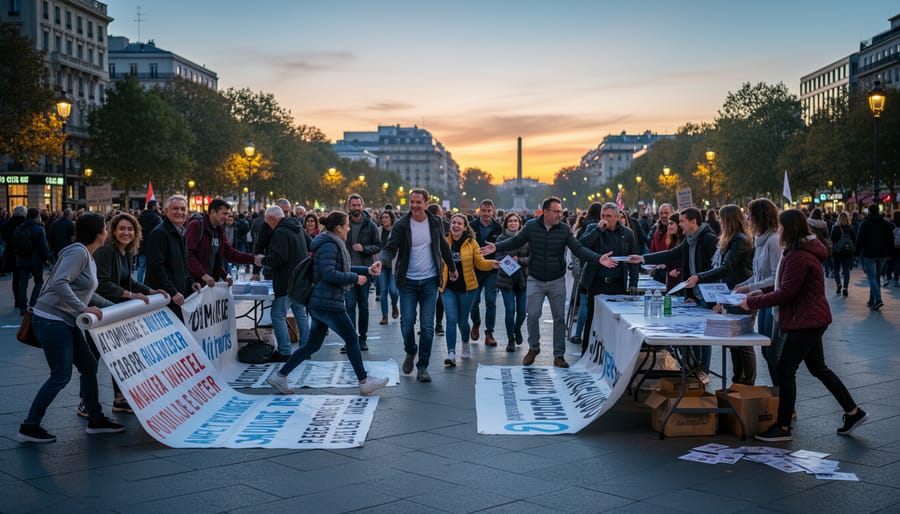
The clock’s countdown shouldn’t paralyze you, it should galvanize you. Here’s the thing about climate action: it happens on every scale simultaneously. Yes, systemic change is essential. But individual choices create the cultural shift that makes systemic change possible. They’re not separate tracks; they’re interconnected movements that amplify each other.
Start where you live. If you’re renting or own your home, switching to renewable options for your electricity is often as simple as choosing a different provider or plan. Many utility companies now offer green energy programs. Can’t afford the premium? Push your landlord or local government to make these options more accessible. The conversation around energy bills and access is fundamentally a justice issue, and your voice matters in demanding equitable solutions.
Transportation is another immediate lever. You’ve heard it before, but the numbers are real: reducing car dependency cuts emissions dramatically. Bike when possible. Advocate for better public transit in your city. If you need a car, consider going electric when it’s financially feasible, or organize a carpool network in your community. Every conversation you have normalizes these choices for others.
But here’s where it gets powerful: collective action multiplies your impact exponentially. Join a local climate group. Show up at city council meetings about zoning, transit, or green infrastructure. Contact your representatives regularly, not just once. Vote in every election, from local to national, and make climate policy a non-negotiable criterion for your support.
Support organizations doing the heavy lifting on systemic change. Whether it’s climate litigation groups, renewable energy advocates, or environmental justice organizations, they need funding and volunteers. Your time and money amplify expert work that individuals can’t do alone.
The deadline isn’t there to shame you. It’s there to remind you that every month, every week, every decision counts. The clock doesn’t distinguish between the person who recycles and the person who organizes a neighborhood solar co-op, but one of those actions bends the curve. Do both anyway. Start today.
I remember checking my phone this morning, watching another minute tick by as I scrolled through climate news. The difference now is that every minute feels weighted with meaning. The Climate Change Clock hasn’t made time move faster, but it’s made me see time differently, not as something that just passes, but as something we’re either using or wasting.
That’s the real genius of this countdown. It isn’t a doomsday device designed to paralyze us with fear. It’s a starting gun. The creators designed it to do exactly what it’s doing right now, making you think about your role in this moment. Every second that ticks away is also a second we still have. The clock doesn’t just count down what we’re losing. It counts down what we can still save.
I’ve watched friends transform their lives after really understanding this urgency. One started a composting program in her apartment building. Another switched careers to work in renewable energy. These weren’t people who thought they could solve climate change alone. They were people who realized that collective action starts with individual commitment, and that their choices ripple outward in ways they might never fully see.
The clock is still counting. But so are we. Every conversation you start, every system you challenge, every sustainable choice you normalize in your community, these are the actions that turn time from an enemy into an ally. We’re not just racing against the clock. We’re racing toward a different kind of future, together, and we’re building it with every decision we make today.