
Renewable energy resources are natural sources of power that replenish themselves faster than we consume them, including solar, wind, hydro, geothermal, and biomass energy. As businesses face mounting pressure to reduce carbon emissions and energy costs in 2026, understanding these five core renewable sources has shifted from environmental checkbox to competitive advantage.
I’ll be honest: three years ago, I walked into a startup accelerator meeting where a founder casually mentioned their operations ran on 80% renewable energy. I thought they were showing off. Turns out, they’d slashed their overhead by nearly 30% while locking in predictable energy costs for the next decade. That conversation changed how I think about why renewables matter for businesses today.
The numbers back up what that founder knew instinctively. Commercial renewable energy installations have dropped in cost by over 85% since 2010, making them accessible to organizations of every size. Small businesses are installing rooftop solar arrays. Mid-sized manufacturers are signing power purchase agreements for wind energy. Even traditionally energy-intensive industries are discovering that geothermal and biomass solutions can transform their bottom lines.
This guide breaks down each of the five major renewable resources through a practical business lens. You’ll learn how each technology actually works, what implementation looks like for different company sizes, realistic cost expectations, and which industries are seeing the strongest returns. Whether you’re exploring options for your first sustainability initiative or scaling an existing renewable energy strategy, you’ll find clear pathways forward.
Understanding Renewable Energy in Business Context
Renewable energy resources are natural sources that replenish themselves on a human timescale, meaning they won’t run out no matter how much we use them. Unlike fossil fuels, which took millions of years to form and deplete with every barrel of oil or ton of coal we burn, renewables continuously regenerate through natural cycles. Solar radiation arrives daily, wind blows constantly across the planet, water flows through rivers, plants regrow each season, and the Earth’s core maintains its heat indefinitely.
What makes a resource truly renewable is this regeneration rate. We can harvest energy from the sun today and again tomorrow without diminishing the source. This fundamental difference reshapes how businesses think about energy procurement, shifting from managing scarcity to optimizing abundance.
- Renewable Energy
- Energy derived from natural sources that replenish continuously, such as sunlight, wind, water flow, and organic matter, making them essentially inexhaustible on human timescales.
- Grid Parity
- The point at which renewable energy costs the same as or less than conventional grid electricity, a milestone most solar and wind have reached in many markets by 2026.
- Power Purchase Agreement (PPA)
- A long-term contract where a business agrees to buy renewable electricity at a fixed rate, allowing companies to access clean energy without installing their own systems.
- Net Metering
- A billing arrangement that credits businesses for excess renewable energy they generate and send back to the grid, effectively using the grid as a battery.
In 2026, businesses are switching to renewables at an accelerating pace for three compelling reasons. First, the economics have flipped. Solar and wind now frequently undercut fossil fuel prices, delivering immediate savings on monthly energy bills. Second, corporate responsibility matters more than ever, with customers, investors, and top talent gravitating toward companies demonstrating genuine climate action. Third, government incentives and rebates have made the upfront investment far more accessible, shortening payback periods to just a few years for many installations.
The practical advantage over fossil fuels is predictability. Once installed, your solar panels or wind turbine produces energy at a known cost, insulating your business from the price swings and supply disruptions that plague oil and natural gas markets.
How Renewable Energy Systems Work for Businesses
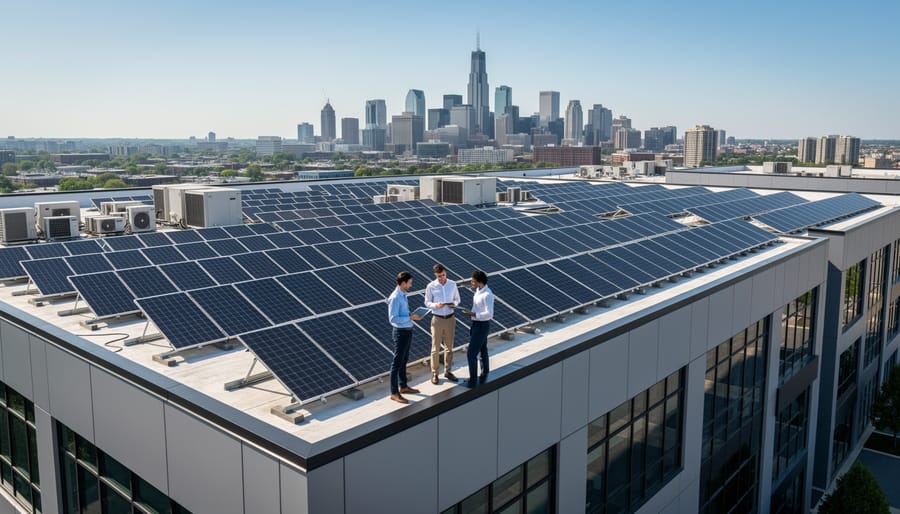
At its core, renewable energy systems capture natural flows, sunlight, wind, water movement, organic decay, or earth heat, and convert them into electricity your business can use. The specific mechanics vary by source (we’ll explore each of the five in detail shortly), but they all share a common endpoint: generating clean power that can either replace or supplement what you’d otherwise purchase from the grid.
When a business installs renewable energy on-site, the electricity generated flows through several essential components. First, the raw energy, photons hitting a solar panel, wind spinning a turbine blade, gets converted into direct current (DC) electricity. Since most business operations run on alternating current (AC), you need inverters and grid connection equipment to transform and synchronize that power with your building’s electrical system. A battery storage system, while optional, lets you bank excess energy produced during peak generation times (like sunny midday hours) and use it later when production drops or demand spikes. This infrastructure, panels or turbines, inverters, meters, and potentially storage, represents the physical footprint of on-site renewable generation.
But here’s the thing many business owners don’t realize: you don’t need to install anything to benefit from renewable energy. You have three primary pathways to access it.
The first is on-site generation, which I just described, you own or lease the equipment and produce power where you operate. A bakery I know in Portland installed rooftop solar and now covers about 60% of their daytime electricity needs, slashing their utility bills while customers love seeing those panels through the storefront windows.
The second pathway is a power purchase agreement, or PPA. With a PPA, a renewable energy developer builds and maintains a solar or wind facility, and you agree to buy the electricity it produces at a fixed rate for a set period (often ten to twenty years). You avoid the upfront capital costs, lock in predictable energy pricing, and still claim the environmental benefits. A small marketing agency in Austin did this with a community solar project, no installation at their rented office, just a portion of a shared solar farm’s output credited to their account each month.
The third option is purchasing renewable energy credits, or RECs. Every time a renewable facility generates one megawatt-hour of electricity, a REC is created certifying that clean energy entered the grid. You can buy these credits to offset your conventional electricity consumption, effectively ensuring your business’s energy footprint is matched by renewable generation somewhere on the grid. It’s the most accessible entry point for businesses without suitable property for installation or those testing the waters before committing to a PPA.
The Five Major Renewable Energy Resources
1. Solar Energy: Harnessing Sunlight
Solar panels convert sunlight directly into electricity through photovoltaic (PV) cells, the rectangular modules you’ve likely seen on office rooftops or spanning fields beside highways. Thermal solar systems take a different approach, using mirrors or collectors to concentrate sunlight and generate heat for industrial processes or electricity production. For most businesses, PV systems are the go-to choice because they’re modular, relatively simple to install, and scale from a few panels on a small retail shop to massive arrays covering warehouse complexes.
A local bakery I know installed 40 panels on their roof in early 2025, cutting their electricity bill by nearly 60% within the first year. That’s the beauty of solar’s scalability, whether you’re running a three-person consulting firm or managing a 200,000-square-foot distribution center, there’s a solar solution that fits. Rooftop installations remain the most popular option for businesses that own their buildings, transforming unused roof space into a revenue-generating asset. Companies without suitable rooftops or building ownership can access solar through community solar programs, essentially subscribing to a portion of a larger solar farm and receiving credits on their utility bills.
The economics have shifted dramatically. According to LCOE+ cost competitiveness data solar has become one of the cheapest electricity sources available in 2026, with installation costs dropping roughly 70% over the past decade. Many businesses are seeing payback periods of five to seven years, after which the electricity is essentially free. Federal and state incentives sweeten the deal considerably:
- Investment tax credits covering 30% of installation costs
- Accelerated depreciation benefits that improve cash flow
- Minimal maintenance requirements, typically just occasional panel cleaning
- Enhanced brand reputation that resonates with environmentally conscious customers and employees
Weather concerns are legitimate but often overstated. Solar panels generate electricity on cloudy days, just at reduced capacity. A Seattle-based tech company I spoke with still produces about 40% of their annual power needs despite the region’s notorious grey skies. Battery storage systems have become more affordable, letting businesses bank excess daytime production for evening use or grid outages. Even without storage, net metering programs in most states credit businesses for surplus power sent back to the grid, effectively using the utility as a giant battery.
2. Wind Energy: Capturing Air Currents
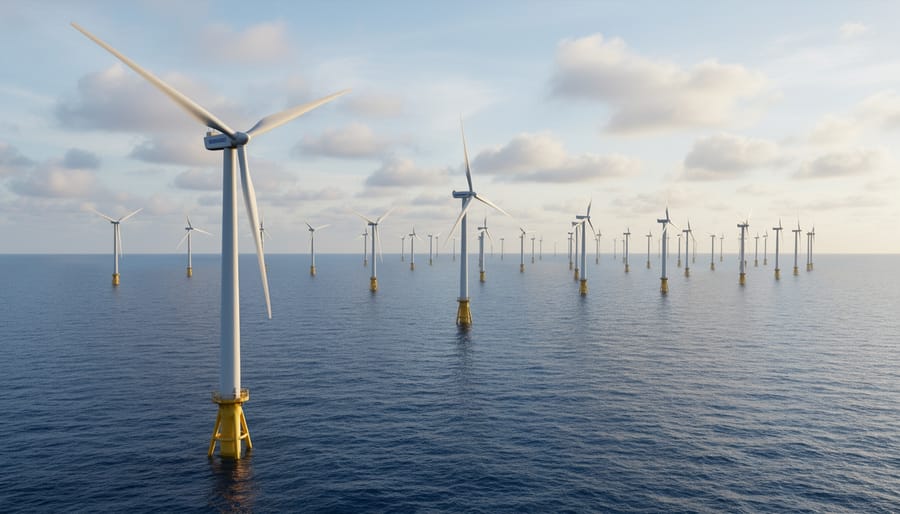
Wind energy converts the kinetic force of moving air into electricity through turbines, essentially giant windmills with blades designed to spin when the wind hits them. This motion drives a generator inside the turbine that produces power. Businesses can tap into wind energy in two primary ways: installing their own turbines on-site or purchasing wind power through agreements with wind farms.
For companies with significant space and the right wind conditions, on-site turbines make sense. You’ll typically see this with manufacturing facilities, university campuses, or agricultural operations that own large parcels of land. A mid-sized manufacturing plant in the Midwest, for instance, installed three commercial-scale turbines on their property in 2024 and now generates about 70% of their electricity on-site, cutting their energy costs dramatically while hedging against grid price fluctuations.
But most businesses access wind energy through Power Purchase Agreements with utility-scale wind farms. These PPAs let you buy wind power without installing turbines yourself. You’re essentially locking in a long-term electricity rate from a wind farm that feeds into the grid. Tech companies have embraced this model aggressively, signing PPAs to offset their data center consumption with wind power generated hundreds of miles away.
Wind works particularly well in regions with consistent air currents: coastal areas, plains, hilltops, and mountain passes. Offshore wind farms capture stronger, steadier winds over water and are expanding rapidly along coastlines. Industries with high, continuous energy demands, like food processing plants, breweries, or logistics centers, benefit most because they can maximize the value of consistent wind generation.
The main considerations are location and scale. You need average wind speeds of at least 13-15 mph for economic viability. Environmental assessments and local zoning matter too, since turbines are visible and produce some noise. But for businesses in wind-rich regions or those willing to invest in PPAs, wind energy delivers reliable, cost-effective power that strengthens both your bottom line and sustainability credentials.
3. Hydroelectric Power: Using Water Flow
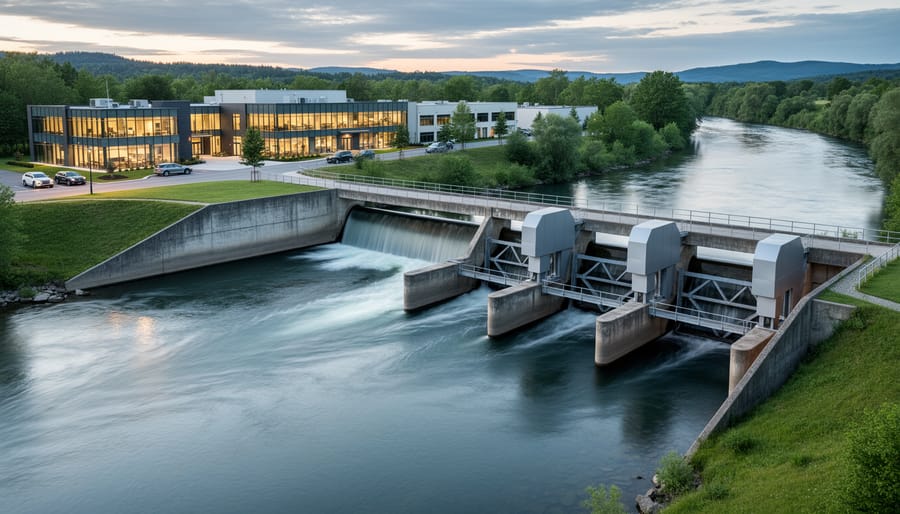
Hydroelectric power channels flowing water through turbines to generate electricity, and it’s surprisingly versatile for businesses. Most people picture massive dams, but those aren’t the only option. Large-scale facilities tap major rivers to produce steady, high-volume power that’s often sold through the grid, while micro-hydro systems, which can be installed on smaller streams or irrigation channels, work beautifully for individual businesses located near consistent water sources.
Run-of-river systems offer a middle ground that’s particularly appealing if you care about ecological impact. Instead of damming an entire waterway, these installations divert a portion of the river’s flow through turbines before returning it downstream. A craft brewery in the Pacific Northwest I visited runs on a small run-of-river setup, generating enough power to cover their refrigeration and brewing operations without disrupting salmon migration. They took care to clean up water quality issues in the process, installing fish-friendly turbines and improving riparian vegetation along their section of stream.
Reliability is where hydro really shines for business applications. Unlike solar and wind, which fluctuate with weather, flowing water delivers consistent baseload power around the clock. That makes it ideal for operations like sawmills, data centers, and food processing plants that need uninterrupted electricity. Industrial facilities along rivers have historically relied on hydro for precisely this reason.
The catch is location. If your business isn’t near a viable water source with adequate flow and the right topography, hydro won’t work. But for those with access, it can provide decades of low-cost, predictable renewable energy with minimal ongoing maintenance.
4. Biomass Energy: Converting Organic Matter
Biomass energy transforms organic materials, wood chips, crop residues, food scraps, even animal manure, into heat, electricity, or fuel. The process typically involves burning the material directly for heat, fermenting it to produce biogas (primarily methane), or converting it into liquid biofuels. For businesses that already generate substantial organic waste, biomass offers a rare opportunity to turn a disposal problem into an energy asset.
Restaurants, food processors, and breweries can install anaerobic digesters that break down food waste and produce biogas, which then fuels on-site boilers or generators. A mid-sized dairy farm might capture methane from manure lagoons to power its operations and even sell excess electricity back to the grid. Agricultural businesses with access to crop residues, corn stalks, rice husks, wheat straw, can burn these materials in specially designed boilers for heating or use them in combined heat and power (CHP) systems that generate both electricity and usable thermal energy simultaneously.
CHP systems are particularly efficient because they capture waste heat that would otherwise escape, achieving overall efficiencies of 70 to 80 percent compared to conventional power generation. A food processing plant running a biomass CHP system might use wood pellets or nut shells to produce electricity for machinery while channeling the heat into cooking, drying, or sterilization processes.
Beyond energy production, biomass embodies circular economy benefits by keeping organic materials out of landfills, where they would decompose and release methane, a potent greenhouse gas, uncontrolled. Instead, businesses capture that energy intentionally, reduce disposal costs, and shrink their carbon footprint in one integrated system. The model works best when the feedstock is local and consistent, minimizing transportation emissions and ensuring reliable fuel supply.
5. Geothermal Energy: Tapping Earth’s Heat
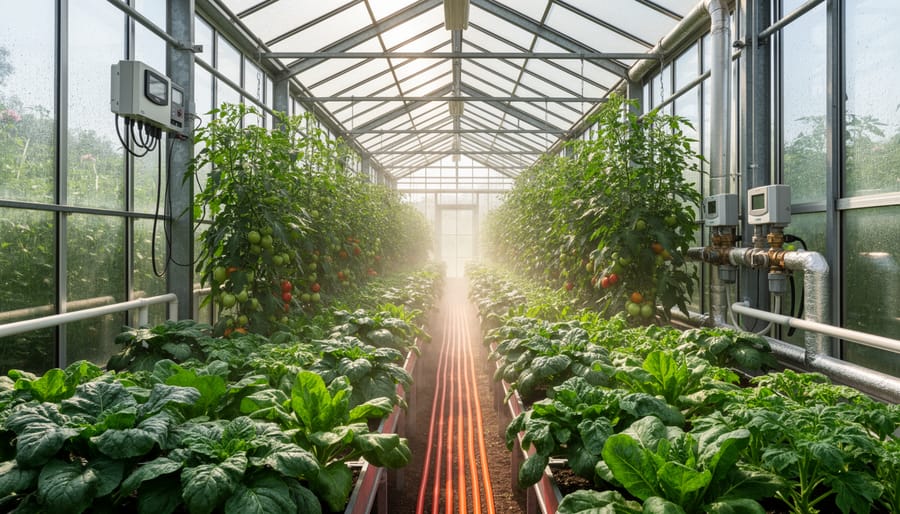
Geothermal systems tap into the stable temperatures beneath the earth’s surface to heat and cool buildings with remarkable efficiency. Even a few feet underground, temperatures remain relatively constant year-round, warmer than winter air, cooler than summer heat, which businesses can leverage through two main approaches.
Geothermal heat pumps (ground-source heat pumps) circulate fluid through underground loops to exchange heat with the earth. In winter, they pull warmth from the ground to heat your building. In summer, they reverse the process, depositing indoor heat back into the earth. These systems work virtually anywhere and can reduce heating and cooling costs by 30-60% compared to conventional HVAC systems. The catch? Installation requires drilling or trenching to install the ground loops, pushing upfront costs to roughly $20,000-$40,000 for a typical commercial installation. But with operational costs so low and equipment lasting 25+ years, most businesses see payback within 5-10 years.
Direct-use geothermal taps hotter underground reservoirs for applications like space heating, industrial processes, or greenhouse warming, particularly viable in volcanic regions or areas with naturally hot groundwater. A greenhouse operation in Idaho I learned about eliminated their gas heating bills entirely by piping geothermal water through floor systems, giving them a competitive edge with year-round production.
Businesses with substantial heating and cooling needs see the strongest returns: office buildings, hotels, schools, healthcare facilities, and climate-controlled agriculture. Geography matters less for heat pumps (they function even in cold climates), but direct-use systems require proximity to geothermal resources. The high initial investment demands patience, but few renewable options deliver such consistent, quiet, maintenance-light performance for decades.
Business Applications Across Industries
Renewable energy isn’t just for massive corporations with billion-dollar sustainability budgets. In 2026, businesses across every sector and size are finding practical ways to integrate these resources into their operations.
Retail companies are leading the charge with rooftop solar installations on warehouses and big-box stores. That massive flat roof space that once just kept the rain out? It’s now generating megawatts of power. Target, Walmart, and countless smaller chains have covered their distribution centers with panels, slashing electricity costs while meeting ambitious carbon reduction goals. These installations often pay for themselves within five to seven years, then continue generating savings for decades.
Agriculture has become a renewable energy powerhouse. Farms are perfect candidates for solar arrays on unused land or barn roofs, while their organic waste streams, crop residue, animal manure, food processing byproducts, fuel biomass systems. I’ve visited dairy farms where biogas digesters turn what was once a disposal problem into electricity and heat, creating a closed-loop system that actually makes money from waste.
Tech companies, often without suitable real estate for on-site generation, have revolutionized renewable adoption through wind power purchase agreements. Google, Microsoft, and smaller tech firms sign long-term contracts to buy wind energy at fixed rates, gaining price predictability while supporting new wind farm development. This model works brilliantly for office-based businesses that rent their space.
Hotels and resorts have embraced geothermal systems for heating and cooling, alongside solar for electricity. The consistent temperatures underground make geothermal ideal for properties with year-round climate control needs, delivering comfort while dramatically cutting energy bills.
Manufacturing operations often deploy hybrid solutions, solar for daytime peaks, biomass for process heat, and grid power as backup. Their high energy demands make the ROI calculations especially compelling, and many plants now generate surplus power they sell back to utilities.
The common thread? Every industry finds its fit.
Making the Business Case: Why Companies Are Switching
I’ve watched dozens of businesses wrestle with the renewable energy decision, and nearly all of them discover the same truth: what starts as an environmental commitment quickly becomes a competitive advantage. The companies making the switch in 2026 aren’t just chasing feel-good headlines, they’re responding to hard numbers that make renewable energy one of the smartest investments on their balance sheets.
The financial case has never been stronger. Solar installation costs have dropped 85 percent over the past decade, and businesses installing systems today typically see payback periods of five to seven years, followed by decades of dramatically reduced energy bills. A regional grocery chain in the Pacific Northwest that I spoke with recently cut their energy costs by 40 percent after installing rooftop solar and switching to wind PPAs for their distribution centers. That savings went straight to their bottom line, funding employee benefits and store improvements.
Beyond immediate savings, renewable energy offers something fossil fuels can’t: price certainty. When you generate your own solar or lock in a long-term wind contract, you’re insulated from the wild swings in natural gas and electricity markets. Businesses that made this move before 2025’s energy price spikes saved thousands while their competitors scrambled.
The motivators driving this shift extend across multiple dimensions:
- Reducing operating costs by 30-50% over the system lifetime
- Meeting corporate sustainability commitments and ESG reporting requirements
- Improving brand reputation with environmentally conscious customers and investors
- Future-proofing against stricter carbon regulations and potential carbon taxes
There’s also the human factor. Employees increasingly want to work for companies aligned with their values, and customers notice sustainability efforts. A 2026 survey found that 68 percent of consumers prefer brands actively reducing their carbon footprint. That preference translates to loyalty and real-world change in purchasing behavior.
The businesses thriving today aren’t waiting for perfect conditions. They’re starting with what fits their budget and building from there, knowing each renewable investment strengthens their position for tomorrow.
Common Questions About Business Renewable Energy
Are the upfront costs too high for small businesses?
While renewable energy systems require initial investment, costs have dropped dramatically, solar panel prices fell over 80% in the past decade. Many businesses start small with a few panels or a partial system, then expand as they see returns, and financing options like leases or power purchase agreements eliminate upfront costs entirely.
What happens when the sun isn’t shining or the wind isn’t blowing?
Most businesses remain connected to the grid, drawing conventional power during low renewable production and selling excess back when generation is high. Battery storage systems are increasingly affordable for businesses wanting greater energy independence, and some renewable sources like geothermal and hydro provide consistent baseload power.
What incentives are available for businesses in 2026?
Businesses can access federal tax credits (including the Investment Tax Credit for solar), accelerated depreciation, state and local rebates, and utility incentives that significantly reduce net costs. Many regions offer grants specifically for small businesses, and some utilities provide free energy assessments to identify the best renewable options for your operation.
Can I use renewable energy if I lease my business space?
Absolutely. Options include community solar programs where you buy a share of a solar farm, green power purchase agreements that don’t require physical installations, and portable solar systems. Some landlords welcome tenant-funded installations that increase property value, especially if you negotiate a longer lease term.
The beauty of renewable energy in 2026 is that there’s genuinely a pathway for every business, regardless of size or circumstances. I’ve watched coffee shops start with a single solar panel to power their point-of-sale system, then gradually expand. The key is matching the solution to your specific situation rather than waiting for perfect conditions.
Beyond the financial equation, businesses find that renewable energy investments deliver unexpected returns through customer & employee appeal. Your sustainability story becomes part of your brand, attracting conscious consumers and talent who want to work for forward-thinking companies. Start by requesting quotes from local installers, exploring community solar options, or simply switching to a green power plan from your utility, any step forward counts.
The five renewable energy resources we’ve explored, solar, wind, hydroelectric, biomass, and geothermal, aren’t just theoretical solutions for major corporations with unlimited budgets. They’re practical, increasingly affordable options that businesses of every size are using right now to cut costs, gain energy independence, and reduce their environmental impact.
What strikes me most when I talk to business owners who’ve made the switch is how accessible this transition has become. You don’t need to install a massive solar farm or build a hydroelectric dam to participate in the renewable energy economy. You can start small: a few rooftop panels, a biomass system that turns your waste into energy, or a power purchase agreement that shifts your electricity supply to wind without any upfront infrastructure investment. The key is matching the right resource to your business context, your location, your energy needs, your budget, and your operational goals.
The businesses leading this shift aren’t waiting for perfect conditions or government mandates. They’re recognizing that renewable energy makes financial sense while aligning their operations with the values their employees and customers increasingly expect. Each company that transitions chips away at our collective dependence on fossil fuels while proving the business case for others to follow.
The future of business energy is renewable. The question isn’t whether your business will eventually make this shift, but when, and which resource will power your contribution to a cleaner, more sustainable economy.