
Climate change irreversibility means certain planetary systems have crossed thresholds where they will continue changing for centuries or millennia, even if we halt all greenhouse gas emissions today. These aren’t abstract predictions. They’re processes already underway in ice sheets, ocean currents, and rainforests that scientists track with increasing concern.
I remember the first time I truly understood what “irreversible” meant in climate terms. It wasn’t during a lecture or while reading a report. It was standing on a melting glacier in 2024, watching meltwater carve channels that would never refreeze in my lifetime. The guide explained that even if global temperatures dropped tomorrow, this ice would keep retreating for decades because of heat already trapped in the system. That’s when the timeline question stopped being academic for me.
The UN released their Earth system Tipping Points report in June 2026, warning that crossing these thresholds could trigger cascading changes with catastrophic consequences for people and the planet. Environment and Climate Change Canada forecasts that 2026 will likely rank among the four hottest years ever recorded. These aren’t distant possibilities. They’re happening on our watch.
But here’s what matters most: irreversibility doesn’t mean inevitability. While some changes are locked in, the severity of what comes next remains entirely within our control. Understanding which systems face the greatest risk, how tipping points actually work, and what timelines scientists project gives us the roadmap to act strategically rather than panic aimlessly. The science is clear, the urgency is real, and the window to prevent the worst outcomes is still open.
What ‘Irreversible Climate Change’ Actually Means
When climate scientists talk about irreversibility, they’re not describing damage we can’t repair with enough time and effort. They mean something far more urgent: changes to Earth’s fundamental operating systems that become self-perpetuating, continuing on their own momentum for centuries or millennia regardless of what we do. Think of it like pushing a boulder off a cliff. Before it tips over the edge, you can still pull it back. Once it crosses that threshold and starts rolling downhill, no amount of effort will stop it.
This is what the UN means when it warns about Earth system tipping points critical thresholds where gradual warming triggers sudden, cascading changes with catastrophic consequences for people and the planet. Irreversible doesn’t necessarily mean permanent in the geological sense, Earth has recovered from dramatic shifts before, but it does mean changes that persist far beyond human lifespans and potentially beyond civilization’s ability to adapt.
- Irreversible change
- A shift in Earth’s climate or ecosystems that continues for centuries or longer even if we stop emitting greenhouse gases, because natural feedback loops keep it going on their own.
- Tipping point
- The critical threshold where a system shifts from stable to unstable, like the moment a rocking chair tips over backwards and can’t return to sitting upright.
- Earth system elements
- Major components of our planet’s climate machinery, including ice sheets, ocean currents, rainforests, and permafrost, each with its own tipping threshold.
- Cascading effects
- When one tipping point triggers others in a domino effect, amplifying changes across multiple systems faster than any single element would change alone.
The distinction matters because it shapes how we respond. Permanent damage suggests futility. Irreversibility on human timescales tells a different story: we can’t undo what crosses the threshold, but we absolutely can prevent reaching it in the first place, and we can limit how severe the consequences become. Understanding this difference turns “too late” anxiety into focused urgency about protecting the Earth system elements still within our power to save.
How Earth’s Tipping Points Work
Think of Earth’s climate like a massive boulder balanced on a hilltop. For decades, we’ve been nudging it gradually with greenhouse gas emissions. It rocks back and forth but stays in place. Then one more push sends it over the edge, and suddenly it’s rolling downhill faster than we can catch it. That’s essentially how climate tipping points work.
The mechanism starts with what scientists call positive feedback loops, though there’s nothing positive about them. Here’s how they unfold: warming temperatures melt Arctic ice, which exposes dark ocean water beneath. That darker surface absorbs more sunlight instead of reflecting it back to space, which causes more warming, which melts more ice. The cycle feeds itself without any additional push from us.
These feedback loops create thresholds in Earth’s systems. Cross that invisible line, and the system doesn’t just warm a bit more, it fundamentally reorganizes itself into a new state. The UN warns that crossing Earth system tipping points could trigger irreversible and cascading changes with catastrophic consequences for people and the planet.
What makes these changes unstoppable once triggered? It comes down to momentum and timescale. Even if we stopped all emissions tomorrow, a tipping point already crossed would continue transforming on its own for decades or centuries. The Greenland ice sheet, for example, could keep melting for thousands of years once destabilized, driven by its own internal dynamics rather than external forcing.
The cascading part is what keeps climate scientists up at night. One tipping element can trigger others, like dominoes falling in sequence. Thawing permafrost releases methane that accelerates warming, which weakens ocean currents, which disrupts rainfall patterns that stress rainforests, which die back and release stored carbon. Each change amplifies the next.
The terrifying aspect is that we can’t predict exactly where these thresholds sit. We’re essentially running an experiment on the only planet we have, and by the time we know for certain we’ve crossed a line, it’s already too late to step back from that particular change.
Major Climate Tipping Elements We’re Watching
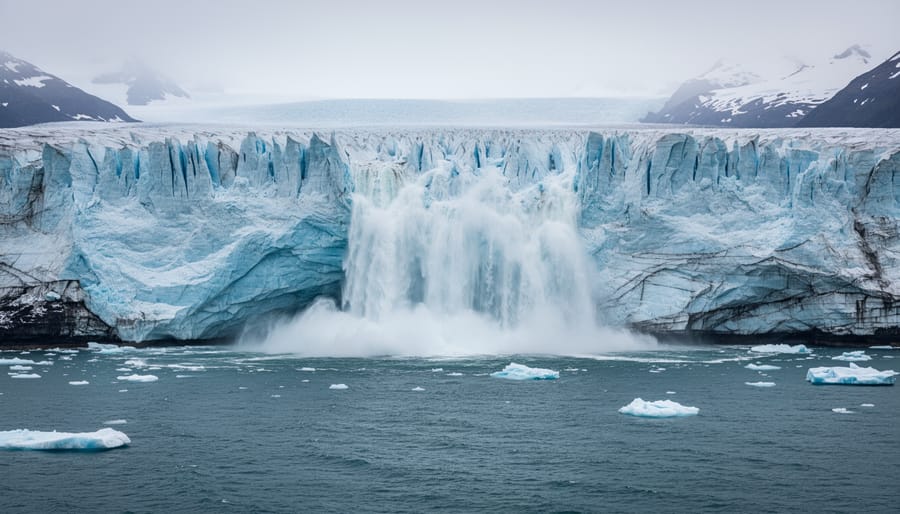
Ice and Snow Systems
The vast ice sheets covering Greenland and Antarctica store enough water to raise global sea levels by over 65 meters if they melted completely. Here’s what makes them tipping elements: once they start losing mass beyond a certain threshold, the process accelerates on its own. As ice melts, the newly exposed dark rock and ocean absorb more sunlight instead of reflecting it back to space, this is the albedo effect. Think of wearing a black T-shirt versus a white one on a sunny day; darker surfaces get hotter. That absorbed heat melts more ice, which exposes more dark surface, creating a self-reinforcing loop.
West Antarctica’s ice sheet is particularly vulnerable because much of it sits below sea level, allowing warming ocean water to eat away at it from beneath. Scientists worry about marine ice cliff instability, a process where once ice shelves collapse, exposed cliffs become too tall to support themselves and crumble into the ocean.
Mountain glaciers from the Himalayas to the Andes face similar risks on a smaller scale, threatening water supplies for billions who depend on glacier-fed rivers for drinking water and agriculture.
Ocean and Atmospheric Circulation
Think of the ocean as Earth’s conveyor belt of warmth and weather. The Atlantic Meridional Overturning Circulation, that’s the current system carrying tropical heat to Northern Europe, has already slowed by roughly 15% since the mid-20th century. If it weakens dramatically or stops altogether, winters in Western Europe could become far harsher while the tropics heat up faster, reshaping weather patterns millions of people depend on.
This isn’t just about distant coastlines. Changes to ocean circulation also destabilize monsoon systems in Asia and Africa. These seasonal rains feed billions of people, and their timing has already become less predictable in recent decades. When a monsoon arrives late or dumps a year’s worth of rain in days instead of months, crops fail, water supplies vanish, and entire communities face cascading crises.
The danger lies in how interconnected these systems are. Warmer waters weaken currents, which shifts atmospheric pressure zones, which redirects storm tracks you see on your local weather forecast. One tipping element pulls another, and the weather patterns your grandparents could set their calendars by become increasingly unreliable.
Ecosystems and Carbon Stores
The world’s tropical rainforests and Arctic permafrost aren’t just carbon storage, they’re potential carbon bombs. Here’s the self-perpetuating danger: as temperatures rise, these ecosystems release massive amounts of CO₂ and methane they’ve locked away for centuries, which accelerates warming, which triggers more release. It’s a vicious cycle.
The Amazon rainforest illustrates this perfectly. Drought and heat stress weaken trees, making them vulnerable to fires. Those fires release carbon and create more dry conditions, leading to more fires. Scientists worry that losing enough forest cover could flip the Amazon from carbon sink to carbon source, a fundamental transformation where the jungle begins drying into savanna, releasing decades of stored carbon in the process.
Permafrost tells a similar story. Frozen Arctic soils hold twice as much carbon as the entire atmosphere. As they thaw, microbes wake up and begin decomposing organic matter that’s been frozen since the last ice age, belching out greenhouse gases. The warming this causes thaws more permafrost, which releases more gases. What makes this particularly treacherous is that once the cycle starts, it feeds itself, our emissions set it in motion, but the ecosystem takes over from there.
The Timeline Question: Are We Already Past the Point of No Return?
The question everyone wants answered has no single date stamped on it, and that’s actually the important point. We haven’t crossed a universal point of no return where all climate systems simultaneously collapse. Instead, Earth system tipping points are scattered along a temperature spectrum, each with its own threshold and timeline. Some changes are already locked in regardless of what we do next, while others remain preventable if we act swiftly.
Let’s be honest about what’s already baked in. Even if emissions stopped today, temperatures will keep rising for several decades due to the greenhouse gases already in our atmosphere, and sea levels will continue climbing for centuries because of ice already committed to melting. That’s sobering, but it’s not the same as total irreversibility. What matters now is the difference between manageable adaptation and catastrophic cascades.
The 1.5°C threshold keeps appearing in climate discussions for good reason. Research shows exceeding 1.5°C risks triggering multiple tipping elements that could push Earth’s climate into a fundamentally different state. We’re uncomfortably close: Environment Canada’s 2026 forecast ranks this year among the four hottest ever recorded, and each fraction of a degree increases the probability of crossing critical thresholds. A June 2026 UN report warns that breaching Earth system tipping points could trigger irreversible and cascading changes with catastrophic consequences for people and the planet.
Here’s what genuinely matters: we’re in what scientists call a critical decision window. Some tipping elements, like parts of the West Antarctic Ice Sheet, might already be committed to eventual collapse, though that process unfolds over centuries. Others, including the Amazon rainforest and Atlantic circulation systems, are showing warning signs but haven’t yet crossed their thresholds. The distinction between approaching a tipping point and passing it represents millions of lives affected and trillions in damages.
The UN climate reports emphasize urgent action precisely because this decade shapes which tipping points we trigger. Every tenth of a degree prevented, every year we avoid crossing 1.5°C, reduces the risk of activating these self-reinforcing processes. We’re not helplessly watching a predetermined disaster unfold. We’re standing at a junction where our choices directly influence whether climate change remains a serious challenge requiring adaptation or becomes an existential threat rewriting civilization’s possibilities. That’s not comforting in the way false reassurance would be, but it’s something far more valuable: it means our actions still have power.
What Irreversibility Means for Real People
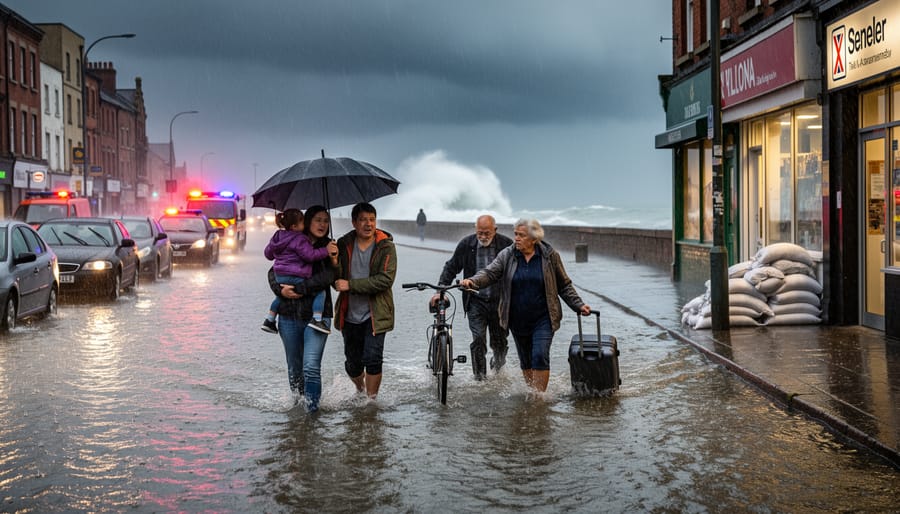
Here’s what “irreversible” actually looks like when it lands in your life.
When ocean circulation patterns shift beyond repair, fishing communities that have relied on the same waters for generations watch their catches vanish. Coastal Bangladesh sees farmland turn to salt marsh as seawater intrusion becomes permanent. Caribbean nations face a future where hurricane intensity doesn’t just spike occasionally, it becomes the baseline.
The food on your plate tells the story most immediately. Irreversible permafrost thaw means Siberian and Canadian farmers lose ground to methane-belching marshland while crop zones shift northward faster than soil quality can adapt. The coffee belt shrinks. Staple grain yields decline in regions where hundreds of millions depend on them. We’re not talking about higher prices at the grocery store, we’re talking about fundamental food security for communities already living on the margins.
Water scarcity becomes the defining challenge. When glaciers that feed major river systems disappear completely, the seasonal meltwater that irrigates farms and fills taps for billions simply stops flowing. You can see water impacts today but crossing irreversible thresholds means permanent loss. The Indus, Ganges, and Mekong rivers lose their glacial insurance policy.
The cruelest part? These impacts hit hardest where people contributed least to the problem. Small island nations face existential threats while coastal megacities in the Global South confront relocation scenarios affecting tens of millions. Indigenous communities watch ecosystems they’ve stewarded for millennia transform beyond recognition.
I’ve spoken with farmers in California’s Central Valley and fishers on the Gulf Coast, people whose livelihoods depend on climate stability. They’re not worried about abstract tipping points. They’re watching their reality shift beneath their feet, knowing that once certain changes lock in, adaptation becomes survival rather than adjustment.
Actions That Still Make a Difference
Here’s the reality that keeps me up some nights: even if we’ve crossed certain tipping points, the story doesn’t end there. The severity of what comes next, the cascading effects, the ability of communities to adapt, all of that still depends on choices we make right now. This isn’t about false hope. It’s about recognizing that gradual warming of 2°C looks fundamentally different from 3°C or 4°C, and every fraction of a degree we prevent matters for real lives.
The systemic shifts happening now offer genuine reason for optimism. The global energy outlook shows renewables outcompeting fossil fuels economically in most markets, not because of goodwill but because they make financial sense. When my city’s business district committed to 100% clean energy last year, the decision came down to cost projections, not just environmental values. That’s the kind of structural change that compounds. NASA’s Earth observation work tracks these transitions from space, measuring forest recovery, monitoring emissions reductions, and providing the data that holds nations accountable to climate commitments.
Policy pressure amplifies individual action exponentially. Contacting representatives about climate legislation, supporting carbon pricing initiatives, voting for candidates with credible climate plans, these shape the rules everyone operates under. I watched my neighbor organize our street to petition for protected bike lanes. Seemed small until the city expanded the program citywide, cutting commuter emissions by thousands of tons annually.
Personal choices still matter, but not because your individual carbon footprint will single-handedly stop warming. They matter because they normalize low-carbon living, create market demand for renewable energy options and build the political will for bigger changes. Actions that create ripple effects:
- Transition your household energy to renewables through community solar programs or direct installation
- Reduce consumption of high-impact products, particularly fast fashion and industrial meat
- Support land protection efforts and reforestation projects that strengthen carbon sinks
- Advocate for climate education and solutions in your workplace or school
- Stay informed through credible sources and share verified climate information to counter misinformation
What hits me hardest is this: the UN climate reports stress the urgency to act on climate change precisely because action still determines outcomes. Environment and Climate Change Canada forecasts that 2026 will likely rank among the four hottest years ever recorded, yet renewable capacity installations are breaking records simultaneously. We’re in a race, and the finish line keeps moving based on how fast we run. Some damage can’t be undone, but how much more damage occurs remains unwritten.
Common Questions About Climate Irreversibility
Common Questions About Climate Irreversibility
The timeline question weighs heavy, but you’re not alone in grappling with these concerns. Here are answers to the questions that keep coming up.
What exactly is a climate tipping point?
A tipping point is a critical threshold where Earth’s climate system crosses from one stable state into a different, self-reinforcing state that continues changing even if we stop adding greenhouse gases. Think of it like pushing a boulder over the crest of a hill, once it starts rolling down the other side, it keeps going on its own.
How bad is climate change right now?
Environment and Climate Change Canada forecasts that 2026 will likely rank among the four hottest years ever recorded. We’re already seeing intensified wildfires, prolonged droughts, and flooding that previous generations never experienced at this scale.
Can we actually reverse climate change?
We can’t undo changes that have already occurred, but we absolutely can stop making it worse and prevent crossing additional tipping points. The severity of future impacts depends entirely on the actions we take now, both collectively through policy and individually through lifestyle shifts.
What happens if we exceed 1.5°C of warming?
Crossing 1.5°C doesn’t flip an immediate doomsday switch, but it significantly increases the risk of triggering multiple tipping points. The UN says crossing Earth system tipping points could trigger irreversible and cascading changes with catastrophic consequences for people and the planet, which is why limiting warming remains critical.
Is it already too late to do anything?
No. While some changes are locked in, the difference between 1.5°C, 2°C, and 3°C warming is enormous in human terms, millions of lives, entire ecosystems, and livable coastlines hang in the balance. Every fraction of a degree we prevent matters.
These questions reflect a search for both truth and hope, which is exactly the balance we need. NASA collects critical long-term observations of Earth’s changing planet from space, giving us the data to track progress and adjust course. The UN climate reports stress the urgency to act on climate change, but urgency and despair aren’t the same thing.
Understanding the science helps, but inspiring real change requires channeling that knowledge into tangible steps. The irreversibility question matters less than what we choose to do with the time and agency we still have. Your concern about these timelines isn’t pessimism, it’s the starting point for meaningful action.
So when will climate change be irreversible? The honest answer is that for some Earth systems, we’re already watching the threshold approach, while for others, the timeline depends entirely on choices we make this decade. That uncertainty isn’t a reason to look away. It’s a reason to lean in.
I’ve spent years writing about climate science, and I’ll admit there are days when the weight of it all feels crushing. But here’s what keeps me going: our generation didn’t choose this challenge, but we hold more power to shape its severity than any that came before us. The tipping points are real. The urgency the UN stresses in its climate reports isn’t exaggeration. Environment and Climate Change Canada’s forecast that 2026 will likely rank among the four hottest years ever recorded should alarm us. But alarm without action is just paralysis dressed up as concern.
Every solar panel installed, every policy fought for, every conversation that shifts someone from despair to determination, every system we reimagine, it all compounds. The future isn’t written in melting ice alone. It’s being written right now, in the choices we’re making. Choose hope. Choose action. The planet’s counting on it.